Introduction: The Universal Language of Quality
Today, product and service quality determines not only customer satisfaction but also the long-term sustainability of brands. Quality standards act as a universal language, guiding organizations to produce reliable, efficient, and high-performance products that meet global requirements.
In the HVAC industry, these standards are especially vital because heating, cooling, and ventilation systems directly affect human health, comfort, and the environment. For this reason, compliance with international quality standards—from design to production, from energy management to occupational safety—is essential for both businesses and consumers.
Why Are Quality Standards Important?
The purpose of quality standards goes far beyond creating a “good product.”
These standards help organizations:
- Minimize errors in production processes,
- Increase energy and resource efficiency,
- Gain competitive strength in global markets,
- Improve employee health and safety,
- Reduce environmental impact.
In short, quality management is not just a certification—it is the foundation of sustainability, reliability, and corporate reputation.
Key International Standards in the HVAC Sector
ISO 9001 – Quality Management System
ISO 9001 is the world’s most widely adopted quality management standard.
In the HVAC industry, this certification demonstrates that a company’s products and services meet customer expectations and that all processes—from production to after-sales—are managed with consistency and discipline.
ISO 14001 – Environmental Management System
ISO 14001 provides a framework for reducing environmental impact.
Since HVAC systems significantly contribute to energy consumption, developing environmentally friendly technologies is a priority.
Companies implementing ISO 14001 can:
- Improve waste management,
- Control emissions,
- Reduce energy use,
- Support environmental sustainability goals.
ISO 50001 – Energy Management System
Energy is the driving force of the HVAC industry.
ISO 50001 focuses on improving energy performance and reducing overall consumption and costs. Organizations monitor, evaluate, and optimize their energy performance, achieving both ecological and financial benefits.
ISO 45001 – Occupational Health and Safety Management
Employees are a company’s most valuable asset.
ISO 45001 ensures workplace safety, prevents accidents, and builds a strong safety culture.
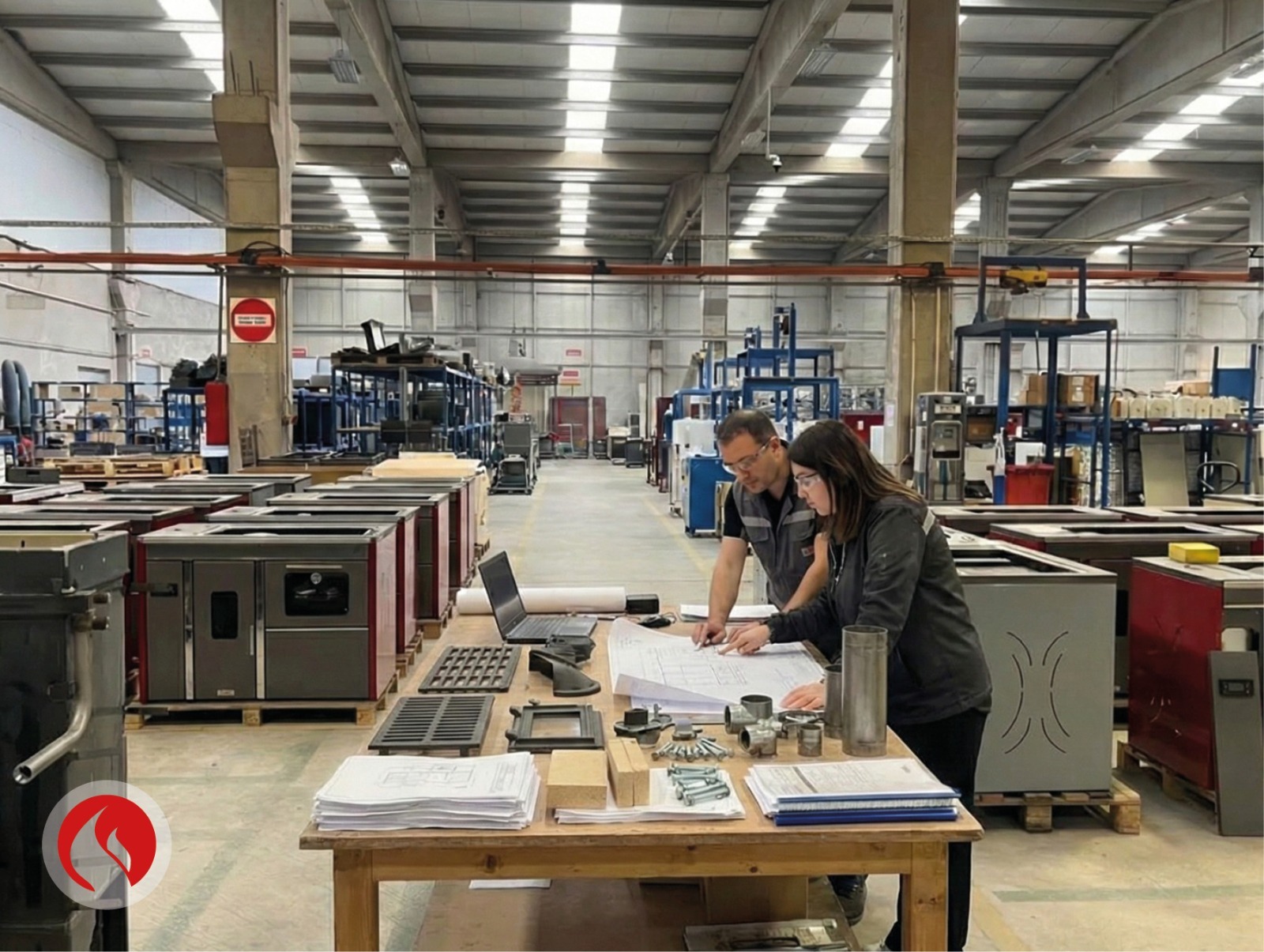
For production-focused companies like İFYIL, this standard reduces risks and strengthens employee well-being and engagement.
EN 15251 – Indoor Environmental Quality Standard
EN 15251 defines comfort and air quality requirements for indoor environments.
It regulates temperature, humidity, lighting, acoustics, and air quality to ensure occupant comfort while maintaining energy efficiency.
ASHRAE Standards – Performance and Energy Efficiency
Developed by ASHRAE, these standards guide HVAC system design and performance requirements. They help optimize energy use, extend equipment life, reduce carbon emissions, and balance comfort with efficiency.
Competitive Advantage Through Quality Standards
In the HVAC industry, quality certificates are not merely technical necessities—they are powerful tools for building trust and brand value.
Today’s customers expect not only performance but also environmental awareness, workplace safety, and responsible production.
Companies aligned with ISO, EN, and ASHRAE standards:
- Ensure long-term customer satisfaction,
- Gain priority in national and international tenders,
- Strengthen corporate reputation,
- Encourage innovation-driven production.
İFYIL Thermo HVAC: The Name of Quality, Efficiency, and Trust
With over 30 years of industry experience, İFYIL Thermo HVAC adopts quality not as a requirement but as a core corporate culture.
All production processes comply with ISO 9001, ISO 14001, ISO 50001, and ISO 45001 standards.
İFYIL’s in-house test laboratories measure energy efficiency, combustion performance, and emission values to guarantee compliance with international norms.
Supported by TÜBİTAK-funded R&D projects, the company continues to develop environmentally friendly and innovative HVAC technologies.
For İFYIL, quality extends beyond production—it includes employee development, customer satisfaction, and a sustainability-focused vision.
“For us, quality is not a document; it is a promise we make to our customers.”
Conclusion: Quality as a Roadmap to a Sustainable Future
Quality standards in the HVAC sector play a defining role in energy efficiency, user safety, and environmental responsibility. Companies that follow these standards contribute not only to the national economy but also to global sustainability goals.
İFYIL Thermo HVAC continues its journey of continuous improvement across production, R&D, and customer relations—because for İFYIL:
Quality is not a destination; it is a journey built on learning, improving, and sharing.Quality is not a destination; it is a journey built on learning, improving, and sharing.